Introduction
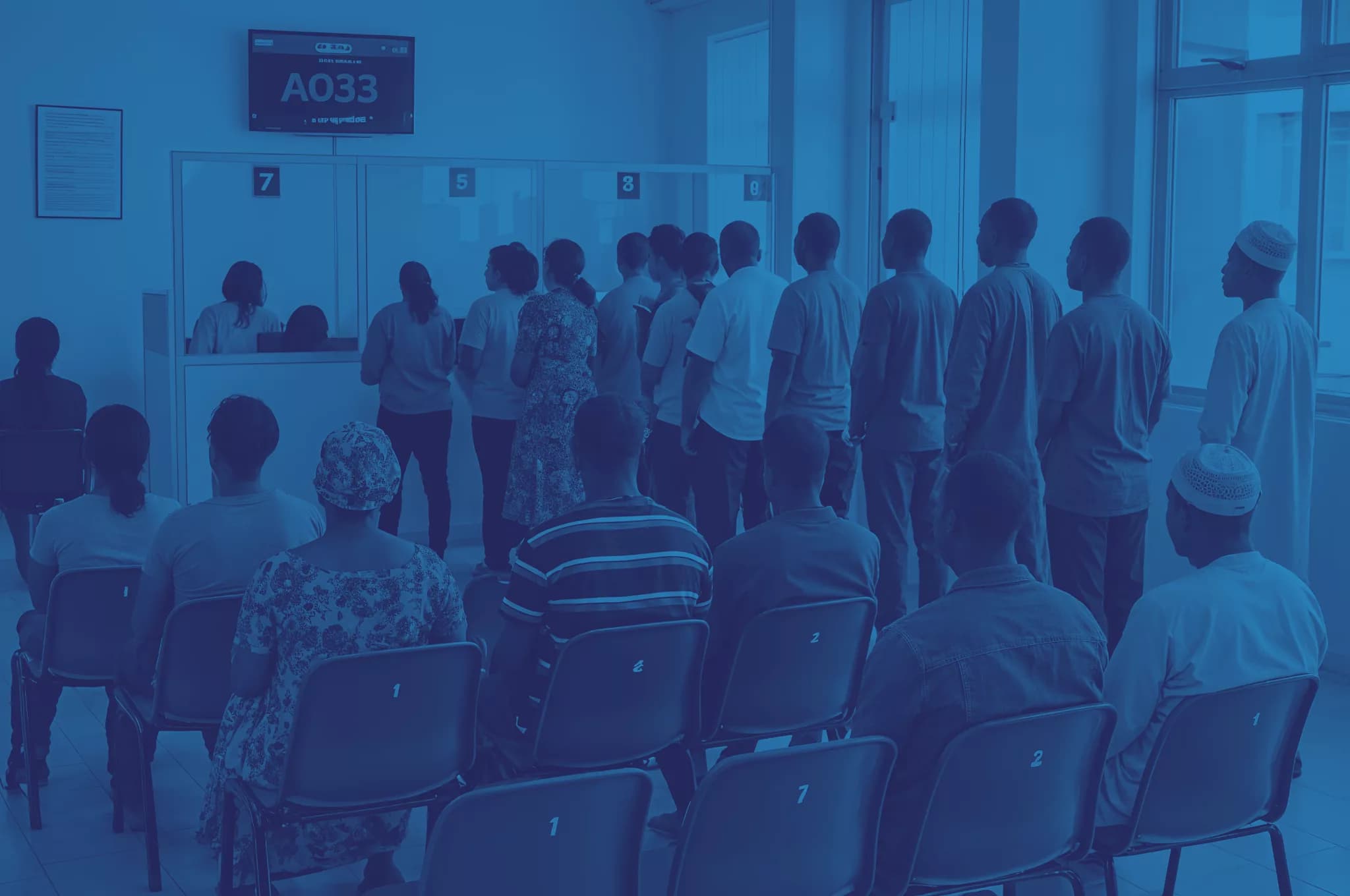
Queue management is a critical element in the service industry, aiming to reduce wait times and improve service delivery. It addresses the issue of random customer arrivals, meaning that the service provided to each customer is unpredictable. An effective queue management system can help service organizations reduce costs, improve profitability, and enhance customer satisfaction. This involves balancing the costs of customer wait times and the expenses associated with adding additional service counters to reduce those wait times.
Waiting Line Problems
Queue management problems are common in everyday life customers waiting in line at a bank, cars waiting to refuel, or workers waiting to use machinery. These scenarios present challenges for businesses in managing customer flow and ensuring efficient service delivery. The goal of queue management is to optimize wait times and reduce customer frustration without incurring additional operational costs. It involves finding a balance between the costs of customer waiting times and the cost of expanding capacity (such as adding service counters or machinery).
Finite and Infinite Population
In a waiting line scenario, there are cases of finite population of customers and infinite population of customers.
A finite population scenario considers a fixed or limited size of customers visiting the service counter. It also assumes that a customer once served will leave the line, thus reducing the overall population of customers. However, finite population model also considers a scenario where the customer after getting served will re-visit the service counter for re-service, leading to increase in finite population.
An infinite population theory looks at a scenario where subtractions and addition of customer do not impact overall workability of the model.
Customer Flow Management and Queuing Systems
To efficiently address queue management issues, it is crucial to understand the different components that define a queue system. Common scenarios include waiting for service at a supermarket, bank, or bus stop. The core principle of queue theory is that service resources are limited, and adding extra service lines incurs costs for the business. A typical queue system consists of the following components:
Arrival Process: This refers to the various ways customers arrive at the service counter, whether individually, in batches, or in bulk. It also considers the distribution of arrival times, finite or infinite population scenarios, and arrival patterns.
Service Mechanism: This includes the available resources for providing service, such as the number of service counters or employees, as well as the queue structure. Service time is assumed to be independent of customer arrival time, but the flow and efficiency of service depend on how well the resources are allocated.
Queue Characteristics: This involves selecting customers for service based on specific criteria, such as first come, first served, random selection, or last in, first out. The characteristics of the queue can also affect customer behavior, such as leaving if the queue is too long or switching to a faster queue
Service Configuration
Service configuration plays a vital role in queue management, as it determines the way services are delivered based on the number of channels and phases. There are four main types of service configurations:
Single Channel, Single Phase: This configuration has one service line and one phase of service, such as a car wash or shipyard, where customers are served in a single queue.
Single Channel, Multi Phase: In this configuration, there is one service line but multiple service phases, such as a bank with tellers who provide different services. Customers may have to go through various stages (e.g., cashier, account manager) before receiving their full service.
Multi Channel, Single Phase: This setup involves multiple service lines for a single phase of service. An example is separate queues for men and women at a single ticket window.
Multi Channel, Multi Phase: This configuration offers multiple service lines and multiple service phases, as seen in laundromats where customers can select from various washers and dryers.
Each of these service configurations has its benefits and challenges, and selecting the right one depends on the specific needs of the business and its customers. By optimizing queue management and understanding service configuration, businesses can enhance customer satisfaction and service efficiency.